


How to Start a Side Hustle to Boost Your Savings
If you’re living paycheck to paycheck, you’re not alone. Many Americans are searching for ways to earn extra income to cover rising expenses and build emergency savings. The good news? You don’t need to quit your job to make more money. Starting a side hustle to boost your savings can help you reach your financial goals faster — whether it’s paying off debt, saving for a vacation, or building an emergency fund.
In this guide, you’ll learn how to start a profitable side hustle step-by-step, explore real U.S. examples, and get practical tools to start earning more today.
🧭 Step 1: Understand Why You Need a Side Hustle
Before diving in, know your “why.” A clear reason helps you stay motivated.
Common goals include:
- Saving for emergencies or retirement
- Paying off student loans or credit card debt
- Building a safety net for future expenses
- Funding personal dreams (like travel or a home down payment)
A side hustle isn’t just about earning more — it’s about creating financial security and freedom.
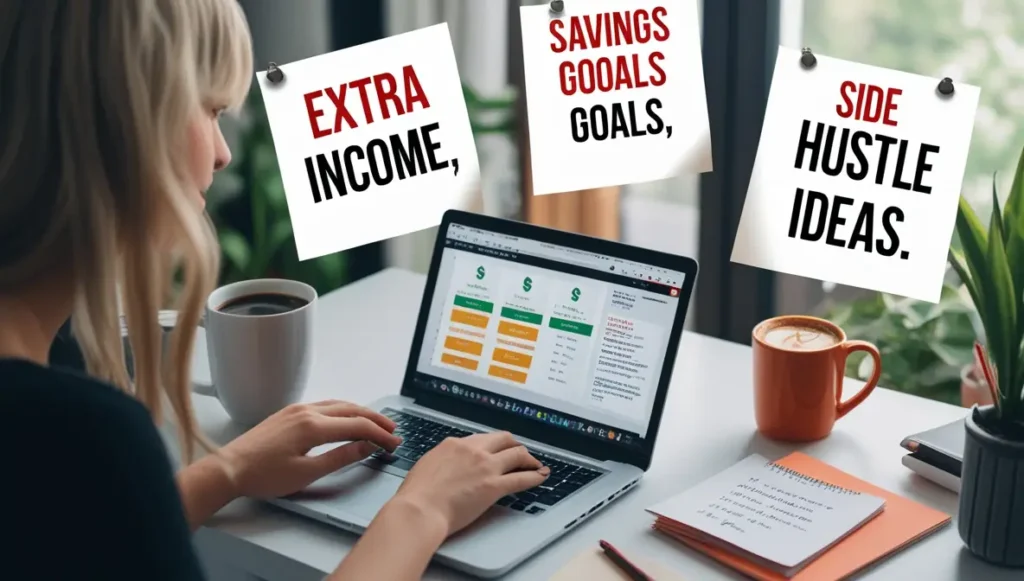
💡 Step 2: Identify Your Skills and Interests
You don’t need to reinvent the wheel. Start with what you already know or enjoy.
Ask yourself:
- What do people often ask me for help with?
- Do I enjoy writing, teaching, crafting, or technology?
- How much time can I dedicate weekly?
Examples:
- If you’re creative → try selling digital designs on Etsy.
- If you’re good at writing → offer blog writing services on Fiverr.
- If you love driving → sign up for Uber or DoorDash.
- If you enjoy organizing → become a virtual assistant.
💼 Step 3: Choose a Profitable Side Hustle
Here are popular U.S. side hustle ideas you can start with little to no money:
🔹 Online Side Hustles
- Freelancing on Upwork or Fiverr (writing, design, marketing)
- Selling printables or digital products on Etsy
- Affiliate marketing through a blog or YouTube
- Online tutoring with platforms like Wyzant or VIPKid
🔹 Offline & Local Side Hustles
- Pet sitting or dog walking (Rover app)
- Delivery driving for Uber Eats or DoorDash
- Selling handmade crafts at local markets
- Renting out a spare room on Airbnb
🔹 Low-Investment Business Ideas
- Social media management for local businesses
- Lawn care or car detailing services
- Offering photography sessions
- Reselling items on eBay, Facebook Marketplace, or Poshmark
Tip: Focus on a side hustle that requires low startup costs, fits your schedule, and offers steady growth potential.
⚙️ Step 4: Set Up Your Side Hustle
Here’s how to launch your hustle step-by-step:
- Create a simple plan — define what you’ll do, your target audience, and pricing.
- Set up payment methods — use PayPal, Venmo, or Stripe.
- Create a portfolio or profile — showcase your skills on LinkedIn, Fiverr, or a personal site.
- Track your income and expenses — use free tools like Google Sheets or apps like QuickBooks Self-Employed.
- Stay legal — check local tax rules and keep receipts for IRS filing.
💵 Step 5: Manage and Grow Your Earnings
Once you start earning, manage your money wisely.
Here’s how:
- Save at least 30–40% of your side hustle income.
- Automate transfers to your savings or investment account.
- Use your extra income to pay down high-interest debt.
- Reinvest a portion in tools, ads, or skill courses to grow.
For example, if you make $500/month from tutoring, set aside $200 for savings, $150 for taxes, and $150 for reinvestment.
📈 Step 6: Track Your Progress
Consistency is key. Use a Side Hustle Savings Tracker (free Google Sheets template) to:
- Record monthly income
- Track savings growth
- Monitor business expenses
- Set new earning goals
👉 Download your free “Side Hustle Savings Tracker” from MySaveMoney.com to stay on track!
💬 Real-Life Example
Meet Lisa from Ohio. She started a weekend photography side hustle in 2022 with just a $300 camera. Within a year, she began earning $800/month — which she saved toward a down payment for her first home.
Her advice:
“Start small but stay consistent. Even a few hundred dollars monthly adds up fast when you save it intentionally.”

🔍 Step 7: Avoid Common Mistakes
Many beginners fail because they:
- Try too many things at once
- Forget to track taxes
- Undervalue their time or skills
- Spend instead of save their side hustle income
Stay disciplined. Treat your hustle like a business — even if it’s part-time.
🔗 Helpful U.S. Resources to Explore
- IRS Self-Employed Tax Center
- Etsy Seller Handbook
- Upwork Guides for Freelancers
- Airbnb Host Resources
(External sources for additional guidance and credibility.)
✅ Conclusion
Starting a side hustle to boost your savings doesn’t require a business degree — just motivation and consistency. From freelancing and selling online to delivering food or offering services, there’s an option for every lifestyle.
Remember: every dollar you earn from your side hustle is an opportunity to save more, stress less, and reach financial freedom faster.
💡 Ready to get started? Download the free Side Hustle Savings Tracker and subscribe for more U.S. money-saving tips from MySaveMoney.com!
FAQs
What is a side hustle?
A side hustle is any small job or business you run outside your main job to earn extra income. Examples include freelancing, delivery driving, or selling products online.
How much can I realistically make from a side hustle?
It varies — some earn $100/month, while others make thousands. The key is choosing a scalable idea and staying consistent.
Do I need to pay taxes on side hustle income?
Yes. The IRS requires you to report all earnings. Keep records of expenses to claim deductions.
Can I start a side hustle with no money?
Absolutely! Many online hustles like writing, tutoring, or reselling require little to no upfront investment.
What’s the best side hustle for beginners in 2025?
Freelancing, print-on-demand stores, delivery driving, and digital product sales remain top options for U.S. beginners.
[…] your child a small, consistent allowance helps them understand that money is earned and […]
[…] review habit, and celebrate small wins.Remember, tracking isn’t about restriction; it’s about freedom — knowing exactly where your money goes and how to make it work for […]
[…] store shopping isn’t just about cheap prices—it’s about adventure, creativity, and financial freedom. By following these thrift store shopping secrets, you can save big, shop sustainably, and maybe […]
[…] tempting to think, “I’ll save for retirement when I earn more.” But the earlier you start, the easier it becomes. Thanks to compound interest, your money […]