

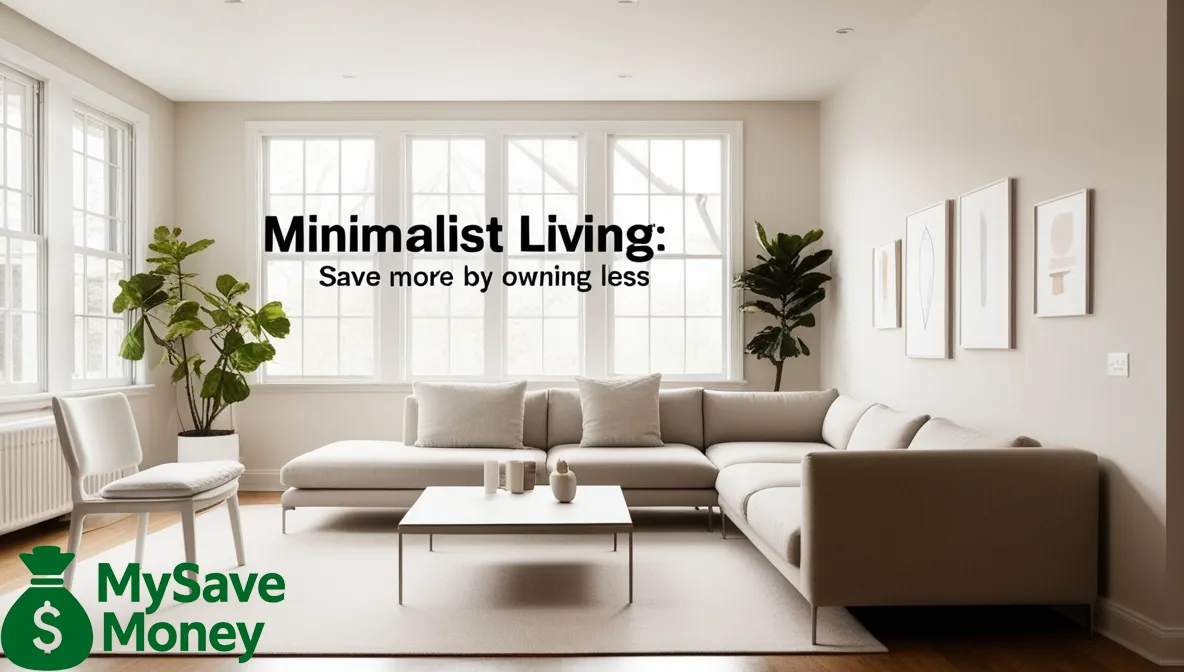
Minimalist Living: How Owning Less Saves You More
Living Simply to Save Smart
Ever feel like your home is full but your wallet is empty? That’s the trap of modern consumer life — buying things we don’t really need, often with money we don’t have.
Minimalist living flips that script. It’s not about deprivation or living in an empty apartment — it’s about owning less to gain more freedom, more time, and yes, more money in your savings account.
In this guide, you’ll discover how embracing minimalist living can help you save money, cut clutter, and find financial peace. Whether you live in a New York apartment or a Texas home, these U.S.-based strategies will show how small lifestyle changes can lead to big savings.
Table of Contents
What Is Minimalist Living?
Minimalism is the intentional choice to own fewer possessions — only what adds real value to your life. It’s about focusing on quality over quantity and spending money wisely.
Minimalists don’t buy less to be “cheap.” They buy less to spend better — on experiences, investments, and goals that truly matter.
Why Owning Less Saves You More
1. Fewer Purchases, More Savings
When you stop buying things you don’t need, your spending drops instantly.
Think about it:
- Cutting one $100 shopping trip per month = $1,200 saved per year
- Canceling unused subscriptions = $20–$50 monthly savings
Apps like Truebill (now Rocket Money) and Mint can help you track spending and find extra cash in your budget.
2. Smaller Spaces, Lower Costs
Owning fewer things often means you don’t need as much space. That translates to:
- Lower rent or mortgage
- Lower utility bills
- Less furniture to buy and maintain
According to Zillow, downsizing from a 2,000 sq. ft. home to a 1,200 sq. ft. space can save $500+ per month in housing costs alone.
3. Less Clutter, Less Maintenance
A minimalist home means less cleaning, organizing, and fixing.
You spend less on:
- Cleaning supplies
- Home storage units
- Replacement items you lost in clutter
Time saved equals money earned — and peace of mind gained.
4. Mindful Spending Builds Financial Freedom
Minimalism teaches you to pause before buying. Ask yourself:
- Do I really need this?
- Will it add long-term value to my life?
- Could this money go toward savings or debt payoff?
This habit helps prevent impulse buys — a leading cause of financial stress for many Americans.
5. Investing in Quality, Not Quantity
When you own less, you can afford better. Instead of five pairs of cheap shoes, you buy one quality pair that lasts years.
This reduces replacement costs and waste.
Practical Example:
Buying a $150 pair of durable sneakers instead of replacing $40 pairs every 6 months saves you $90+ per year and reduces landfill waste.
How to Start Living a Minimalist Life
Step 1: Declutter Room by Room
Start small. Pick one area — like your closet or kitchen — and ask:
- Have I used this in the past 6 months?
- Does this serve a purpose or bring joy?
Donate or sell what doesn’t make the cut. Apps like OfferUp and Facebook Marketplace make it easy to earn cash from decluttering.
Step 2: Create a “One-In, One-Out” Rule
Every time you buy something new, remove one item from your home. This keeps clutter under control and encourages mindful spending.
Step 3: Simplify Your Wardrobe
Capsule wardrobes — owning 25–40 mix-and-match clothing pieces — save time and money.
According to the Bureau of Labor Statistics, the average American spends $1,800/year on clothing. Minimalists often cut that by half.
Step 4: Go Digital
Minimalism isn’t just physical — it’s digital too.
Unsubscribe from marketing emails and delete unused apps that tempt you to spend.
Use budgeting tools like:
- YNAB (You Need A Budget) – great for goal-based saving
- Goodbudget – envelope-style tracking for families
Step 5: Rethink Gifting
Encourage friends and family to give experiences instead of things.
A concert ticket or dinner out creates memories — not clutter.
Step 6: Automate Your Savings
When you buy less, redirect that extra money toward savings or debt payoff.
Apps like Chime and Ally Bank let you automatically round up purchases to grow your savings faster.
The Financial Benefits of Minimalism
| Area | Traditional Lifestyle | Minimalist Lifestyle | Annual Savings |
|---|---|---|---|
| Shopping | Frequent purchases | Buy only essentials | $1,200+ |
| Housing | Large home | Smaller space | $6,000+ |
| Utilities | High bills | Reduced usage | $500+ |
| Maintenance | Many items to repair | Fewer possessions | $300+ |
| Total Estimated Savings | — | — | $8,000+ per year |
Minimalism Isn’t About Sacrifice — It’s About Freedom
By owning less, you’re not giving up comfort — you’re gaining control over your money, time, and focus.
You’ll spend more on things that truly matter — like paying off debt, traveling, or building an emergency fund.
For more on financial simplicity, check out The Minimalists — a great resource to dive deeper into this lifestyle.
Suggested Downloadable Freebie
Download the “Minimalist Living Starter Checklist” (Google Sheets)
This free checklist helps you declutter, budget smarter, and track savings from your new minimalist lifestyle.
Conclusion: Start Living with Less and Saving More
Minimalist living isn’t about empty shelves — it’s about financial empowerment.
By choosing to own less, you naturally spend less, stress less, and save more for what truly matters.
Start today: declutter one drawer, cancel one unnecessary subscription, or sell one unused item.
Your journey to financial freedom begins with less stuff — and more purpose.
Subscribe for more U.S. money-saving tips and free budgeting tools.
FAQs
How does minimalist living save money?
By reducing unnecessary purchases, housing costs, and maintenance expenses, you spend less and save more each month.
Is minimalism possible for families with kids?
Absolutely! Focus on shared experiences, limit toys, and teach children the value of quality over quantity.
Can minimalism help with debt repayment?
Yes. The money saved from minimalism can be redirected toward paying off credit cards or student loans faster.
Do I have to live in a tiny home to be a minimalist?
Not at all. Minimalism is about mindset — you can live minimally in any space by reducing clutter and spending intentionally.
What’s the first step to becoming a minimalist?
Start by decluttering one area of your home and track what you save by selling or donating unused items.