

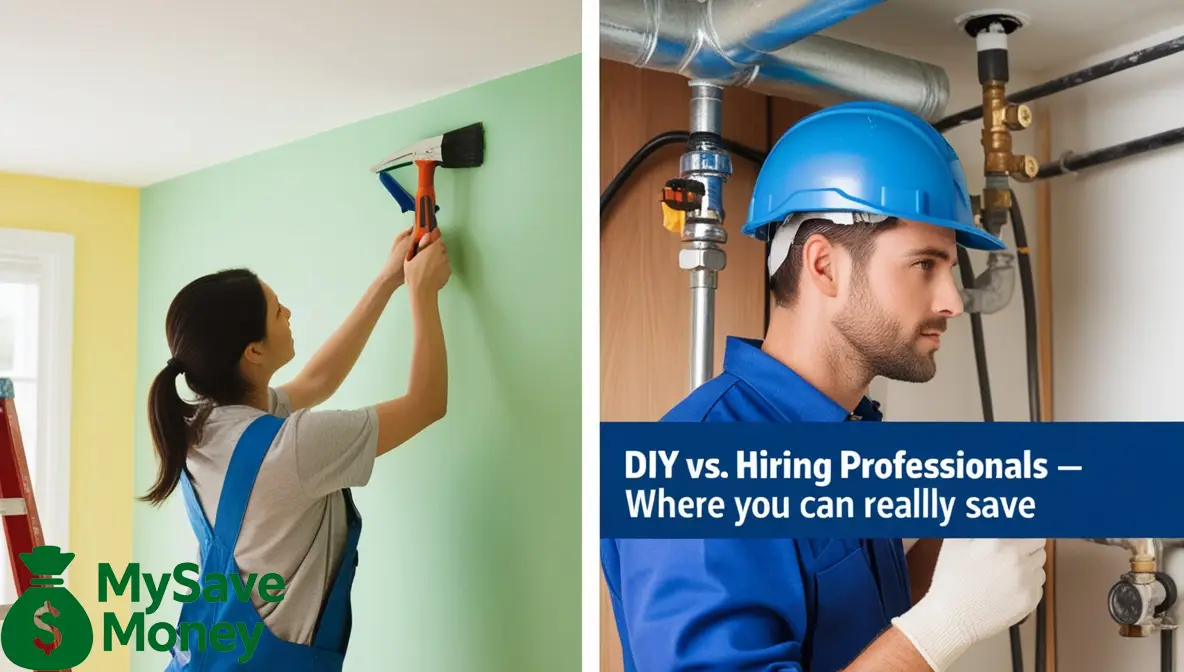
DIY vs Hiring Professionals: The Real Cost of “Doing It Yourself”
We’ve all been there—you see a home project on YouTube or Pinterest, and think, “I can do that!” But before you grab your toolbox, it’s worth asking: does DIY really save money?
In the United States, homeowners spend an average of $13,000 per year on home improvement and maintenance. That’s a lot—and knowing when to DIY vs. hire professionals can make a big difference in your wallet.
This guide will help you figure out when it’s smarter (and cheaper) to roll up your sleeves, and when it’s safer and more cost-effective to hire an expert. You’ll see real U.S. examples, practical comparisons, and money-saving tips to help you make the best choice for your budget.
Table of Contents
When DIY Can Save You Serious Money
Doing things yourself doesn’t just save labor costs—it also gives you control over materials, timelines, and creativity. But not all DIY projects are equal. Here’s when it really pays off.
1. Simple Home Repairs and Maintenance
Some small fixes are easy and inexpensive to handle on your own:
- Leaky faucet repair: $15 in parts vs. $125+ for a plumber.
- Toilet flapper replacement: $8 DIY kit vs. $150+ plumber visit.
- Patch drywall holes: $20 materials vs. $200+ professional service.
💡 Pro Tip: Watch YouTube channels like Home Repair Tutor or This Old House for clear, beginner-friendly tutorials.
2. Painting and Decorating
Painting is one of the best DIY home projects for beginners.
- DIY cost: $50–$100 (paint, rollers, tape)
- Pro cost: $300–$800 per room
Even if you’re not artistic, taping edges and rolling paint isn’t hard—and you’ll instantly refresh your home’s look.
🎨 Tip: Use U.S. stores like Home Depot or Lowe’s for free color consultations.
3. Lawn Care and Landscaping
A professional lawn service can cost $50–$100 per visit, but DIY lawn care with a $200 mower and basic fertilizer can save you hundreds yearly.
Tasks perfect for DIY:
- Mowing and edging
- Fertilizing
- Planting flowers or shrubs
- Mulching and leaf cleanup
If you want to go advanced, apps like Yard Mastery or LawnStarter can guide your fertilizing and watering schedule.
4. Cleaning and Organization
Instead of paying for deep cleaning ($150–$300), you can make your own DIY cleaning solutions using household ingredients:
- Glass cleaner: Vinegar + water
- All-purpose cleaner: Baking soda + lemon juice
- Laundry freshener: White vinegar instead of softener
🧽 Bonus: You’ll reduce chemical exposure and save money long-term.
When Hiring Professionals Is Worth It
Sometimes, cutting corners with DIY can lead to bigger expenses—or safety hazards—later. Here’s when paying a pro is the smarter choice.
1. Electrical Work
DIY electrical work is dangerous and often illegal without a license.
- Average electrician cost: $50–$100/hour
- Potential DIY mistake: Thousands in damages—or worse, a fire risk.
👉 Always hire a licensed electrician for wiring, breaker replacements, or installing new fixtures.
2. Plumbing Beyond Basics
Simple fixes (like a dripping faucet) are fine. But major plumbing tasks—like sewer line repairs, re-piping, or water heater installs—should be done by professionals.
A small DIY error here can flood your home. Literally.
💧 Tip: Use the Angi app (formerly Angie’s List) to compare licensed plumbers in your area.
3. Roofing and Structural Work
Falling off a ladder isn’t worth saving a few hundred dollars. Roof repairs, foundation issues, or wall demolitions need professional expertise and insurance.
- DIY risk: Injury + structural damage
- Pro cost: $1,000–$5,000 (but insured, safe, and warrantied)
4. Major HVAC and Appliance Repairs
Heating, cooling, and large appliance repairs require certification.
For example:
- DIY furnace fix: Risk voiding warranty
- Pro HVAC tune-up: $100–$150, ensuring energy efficiency and safety.
🌡 Money-Saving Tip: Schedule annual HVAC maintenance in spring or fall to avoid peak-season costs.
Cost Comparison: DIY vs Hiring Professionals
| Project | DIY Cost (USD) | Professional Cost (USD) | Savings Potential |
|---|---|---|---|
| Painting Bedroom | $75 | $500 | $425 |
| Faucet Replacement | $20 | $150 | $130 |
| Lawn Mowing (Yearly) | $0 (if self) | $1,200 | $1,200 |
| Roof Repair | $250 materials | $2,000+ | Risk not worth it |
| Electrical Wiring | $100 tools | $1,000+ | Safety risk |
👉 Rule of Thumb:
If a mistake could harm your safety, void a warranty, or cost thousands to fix, hire a professional.
How to Decide: A Simple DIY Decision Framework
Use this checklist before starting any project:
✅ Skill Level: Have you done something similar before?
✅ Tools Required: Do you already own the tools?
✅ Time Commitment: Can you finish it in one weekend?
✅ Safety Risk: Could someone get hurt?
✅ Cost Comparison: Is DIY at least 40–50% cheaper?
If you answer “yes” to all but safety, go for DIY!
Money-Saving Resources for DIYers
- Home Depot Workshops – Free in-store sessions for basic skills.
- YouTube Channels: DIY Creators, Fix This Build That
- Reddit: r/HomeImprovement and r/Frugal for peer advice.
- Tool Rental Programs: Rent expensive tools at Lowe’s or Menards instead of buying.
- Compare Estimates: Use Angi.com to compare local professionals and save up to 20%.
Suggested Downloadable Freebie:
🎁 “DIY or Hire? Home Project Decision Checklist (Google Sheets)”
A simple template to compare project cost, time, and safety to help you decide whether to DIY or hire a pro.
Conclusion: Balance Savings and Safety
DIY projects can be rewarding and cost-effective—when done right. From painting walls to maintaining your lawn, there are many ways to save money DIY without risking safety or quality.
But when the job involves electricity, structure, or plumbing, it’s worth the investment to hire professionals.
Saving smart isn’t just about spending less—it’s about avoiding costly mistakes.
💡 Start small, learn skills, and track your savings with our free checklist.
👉 Subscribe for more U.S. money-saving tips from MySaveMoney.com!
FAQs
Is it always cheaper to do DIY projects?
Not always. While DIY saves labor costs, mistakes can increase expenses. It’s best for small, low-risk projects like painting or simple repairs.
What home repairs should I never DIY?
Avoid electrical, gas, roofing, and major plumbing work—these require permits and safety training.
How do I estimate the true cost of DIY vs. hiring?
Add material costs, tools, and time. Compare that with professional estimates from sites like Angi or Thumbtack.
How can I learn DIY safely?
Start with free YouTube tutorials, local hardware store workshops, and beginner-friendly guides before tackling bigger projects.
Are DIY tools expensive?
Not necessarily. Rent tools from Home Depot or Lowe’s instead of buying them outright.
[…] sooner you act, the sooner your savings add up.Start today and watch your home improvements pay you back—month after […]