

Owning a car in the U.S. has its perks — convenience, freedom, commuting ease — but it also comes with a steady stream of maintenance bills. For many beginners to personal finance, car repair and upkeep can silently drain your budget if you’re not careful. What if you could slash those costs and keep your vehicle running longer — without being an auto expert?
In this article, you’ll discover car maintenance hacks that save you hundreds each year by combining simple DIY tricks, smart habits, and money-saving strategies. These tips are tailored for U.S. drivers, with real cost examples, budget planning, and DIY safety ideas. Whether your goal is to delay repair shop visits or avoid surprise breakdowns, these methods will help you protect your car and your wallet.
Why Smart Car Maintenance Matters
Before diving into the hacks, here’s why being proactive pays off:
- Preventive maintenance avoids big repairs. A small leak or worn belt left unaddressed can lead to a full breakdown and a $500+ repair cost.
- Improves fuel efficiency. Proper tire pressure, clean filters, and good engine tune-ups can improve gas mileage.
- Extends your car’s lifespan. Better maintenance means delaying the day you feel forced to replace your vehicle.
- Avoids safety risks. Brakes, lights, tires — if they fail, the consequences go beyond money.
Table of Contents
Car Maintenance Hacks That Save You Hundreds Each Year
Here are tried-and-true strategies you can use (many yourself) to reduce your car costs:
1. Follow a Maintenance Schedule (Don’t Wait Until It’s “Broken”)
- Use your owner’s manual or car manufacturer app to find recommended intervals (oil change, timing belt, coolant flush).
- Mark dates and mileage on your calendar app or a physical planner.
- Tip: A $30 filter and $40 oil change every 5,000 miles is far cheaper than a $700 engine repair down the road.
1a. Set Reminders
Set your phone or car app to alert you a few hundred miles before scheduled maintenance is due. This avoids procrastination.
2. Do Basic Checks Yourself (Monthly or Quarterly)
These are quick inspections you can perform in your driveway or garage:
- Check tire pressure (under-inflated tires reduce fuel economy).
- Inspect tire tread depth using a penny: if Lincoln’s head is fully visible, it’s time to replace.
- Check oil level and color; if it’s very dark before the due interval, consider earlier change.
- Inspect hoses and belts (look for cracks, wear).
- Top off windshield washer fluid, coolant, and brake fluid (if needed).
Doing this yourself can prevent more expensive issues. A gas station air check costs maybe $2–$4; doing it yourself is free (once you have a gauge).
3. Do Your Own Oil & Filter Change (if comfortable)
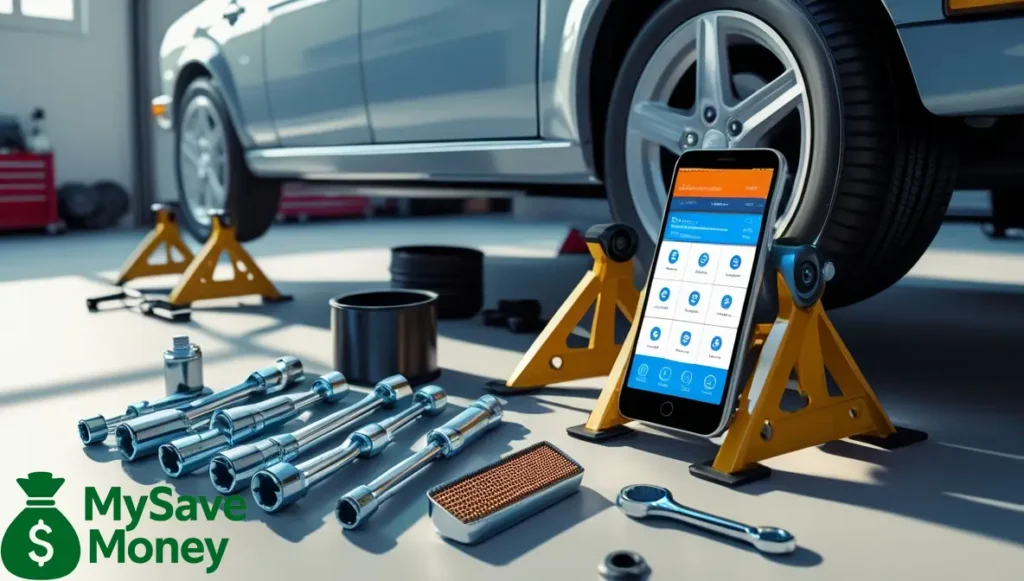
Oil changes are one of the most frequent recurring costs. Here’s how to DIY:
- Buy the correct oil (e.g. 5W-30) and filter (check compatibility).
- Use a jack and stands (safely) to lift the car.
- Drain oil into a pan, replace the filter, and refill to correct level.
- Properly recycle the used oil (many auto parts stores accept it free in the U.S.).
You’ll typically pay $20–40 in materials vs. $50–100 at a shop — saving ~$30–60 per change. Over 3 changes, that’s $90–180 saved yearly.
4. Rotate & Balance Tires Regularly
Rotating your tires every 5,000–7,500 miles prevents uneven wear and extends tire life by months or years.
Balancing ensures smooth riding and reduces wear on suspension.
Cost at a shop: $20–$50 per rotation.
DIY option (if you have tools): negligible.
Extreme case: saving $100–200 per year if you avoid premature tire replacement.
5. Use Quality Filters & Fluids (Don’t Cut Too Deep)
Cheap filters or low-grade fluids can save you a few dollars now — but potentially cost you in engine damage or reduced performance later.
Buy filters from reputable brands and stick to manufacturer specs.
It’s a balance: don’t overpay on premium brands, but avoid ultra-cheap junk.
6. Keep Your Car Clean (Interior & Exterior)
- Washing your car regularly removes salt and debris that can cause rust.
- Use a protective wax or sealant.
- Clean interior to prevent wear, damage, or stains that reduce resale value.
A $15 DIY wax can protect paint and avoid expensive bodywork.
7. Drive Smart & Avoid Harsh Habits
Your driving style affects maintenance costs:
- Avoid aggressive starts, stops, and hard cornering (less stress on brakes, tires, suspension).
- Don’t idle excessively — it wastes fuel and strains the engine.
- Stay within speed limits (higher speeds increase wear and heat).
- Use cruise control on highways to reduce fluctuations in acceleration.
Over time, smoother driving can reduce brake, tire, and engine strain — saving $50–150 annually.
8. Use an App or Tool to Track Costs & Schedule
Apps like Fuelly, Drivvo, or Autobooks help you log maintenance, costs, and reminders.
A small subscription (or free version) helps you see trends (e.g. “my brake pads cost me $300/yr”) so you can identify waste.
9. Negotiate & Shop Around for Repairs
- Always get 3 quotes before non-emergency repairs.
- Use RepairPal or YourMechanic to estimate fair prices in your ZIP code.
- Ask for parts vs. labor breakdown.
- Use coupons or membership discounts (AAA, local auto clubs).
- Request aftermarket parts (if safe) rather than OEM for non-critical parts.
You might shave 10–30% off a repair bill just by negotiating or comparing.
10. Buy Good (Used) Tools Wisely
Having a few tools at home can let you do minor jobs (battery change, air filter, wiper replacement):
- Basic socket set, jack stands, torque wrench, creeper, oil pan.
- Tools may cost $100–200 one time, but over years you may recoup that by avoiding small shop visits (e.g. $50 for a wiper blade installation).
11. Monitor & Fix Small Issues Early
- A cracked hose, a small coolant leak, or a failing sensor may cost $20–50 to fix early — vs. $300 or more later.
- Use OBD-II scanner (cost ~$30–50) to read check-engine codes before they become serious.
12. Use Fuel Rewards & Cashback Programs
While not exactly maintenance, reducing fuel costs indirectly maintains budget:
- Use apps like GasBuddy or Shell Fuel Rewards.
- Pay with cashback credit cards that give 2–5% on gas or auto expenses.
- Over a year, $100–200 can be saved here.
13. DIY Minor Repairs (Wipers, Bulbs, Air Filter)
Many basic parts are plug-and-play:
- Replace wiper blades (~$10–20 each).
- Swap out headlight or taillight bulbs.
- Replace cabin air filters and engine air filters.
These small tasks often cost $5–25 in parts; shops may charge $50–100 for labor.
14. Delay or Avoid Unnecessary Add-Ons
- Question the necessity of “premium additives” (many offer marginal benefit).
- Avoid over-accessorizing (expensive stereo installs, top-tier upgrades) unless they add resale value.
Real-Life Savings Example
Case: Sarah in Ohio
- Drives 12,000 miles/year.
- Prior: Took car to shop for every oil change ($70 × 3 = $210).
- Switched to DIY: $35 in parts each time × 3 = $105 → saves $105.
- Rotated tires at shop twice: cost $30 × 2 = $60. She bought a tire jack & did it herself afterward → saves $60.
- Replaced wiper blades and filters herself instead of paying $40/labor each time (4 times) → saves $160.
- Total savings that year: ~$325.
Even accounting for tool purchases or oil disposal, net gain is positive.
Expand this over 5 years: $1,500+ saved — enough to cover insurance or a side hustle investment.
Bonus Tip: Create a Car Maintenance Savings Account
- Each time you skip or reduce a shop cost, move that dollar amount into a dedicated “Car Savings” fund (even $10/month helps).
- Use that fund for future maintenance, instead of scrambling when bills arrive.
- You’ll psychologically see and appreciate the savings.
Suggested Downloadable
Free “Car Maintenance Checklist & Tracker”
- Monthly / quarterly / yearly tasks table
- Expense log (date, cost, type)
- Alerts section for upcoming services
- DIY vs. shop columns
You can offer this as a free opt-in to grow your email list.
FAQs (Frequently Asked Questions)
Is DIY car maintenance safe for beginners?
Yes — for basic tasks like oil change, air filter, wipers, bulbs, and checking fluids — as long as you follow safety protocols, use correct tools, and consult your car’s manual.
How much can I realistically save per year using these hacks?
Many drivers report $200–$400 or more in avoided repair and labor costs — enough to cover several months of insurance or a car insurance deductible.
When should I NOT attempt DIY and go to a shop?
For major issues involving transmission, major engine work, structural repairs, or any job requiring advanced diagnostics — leave that to certified mechanics.
Does neglecting maintenance hurt car resale value?
Absolutely. A documented maintenance history can boost resale/trade-in value. Poor upkeep can reduce your car’s value by thousands.
Can apps really help me track and save?
Yes. Apps like Fuelly, Drivvo, or even a spreadsheet help you spot trends, overspending, or maintenance gaps — and hold you accountable.
Conclusion
By using these car maintenance hacks that save you hundreds each year, you’ll not only keep your vehicle running smoothly — you’ll protect your wallet too. A few proactive steps like DIY oil changes, regular checks, smart driving habits, and budgeting for maintenance can add up to serious savings over time.
If you’re ready to take control of your car costs, start using the free Car Maintenance Checklist & Tracker and stay consistent. Subscribe for more U.S. money-saving tips, and let me help you grow your financial freedom — one hack at a time.
Subscribe for more U.S. money-saving tips.
[…] complicated—it’s smart shopping. By using the best couponing strategies for beginners, you can save hundreds (or even thousands) each year without changing your lifestyle […]
[…] smart, cost-effective upgrades that lower your energy use, qualify for rebates, and help you save year after year. From simple fixes like LED lights to bigger investments like solar panels, these […]