

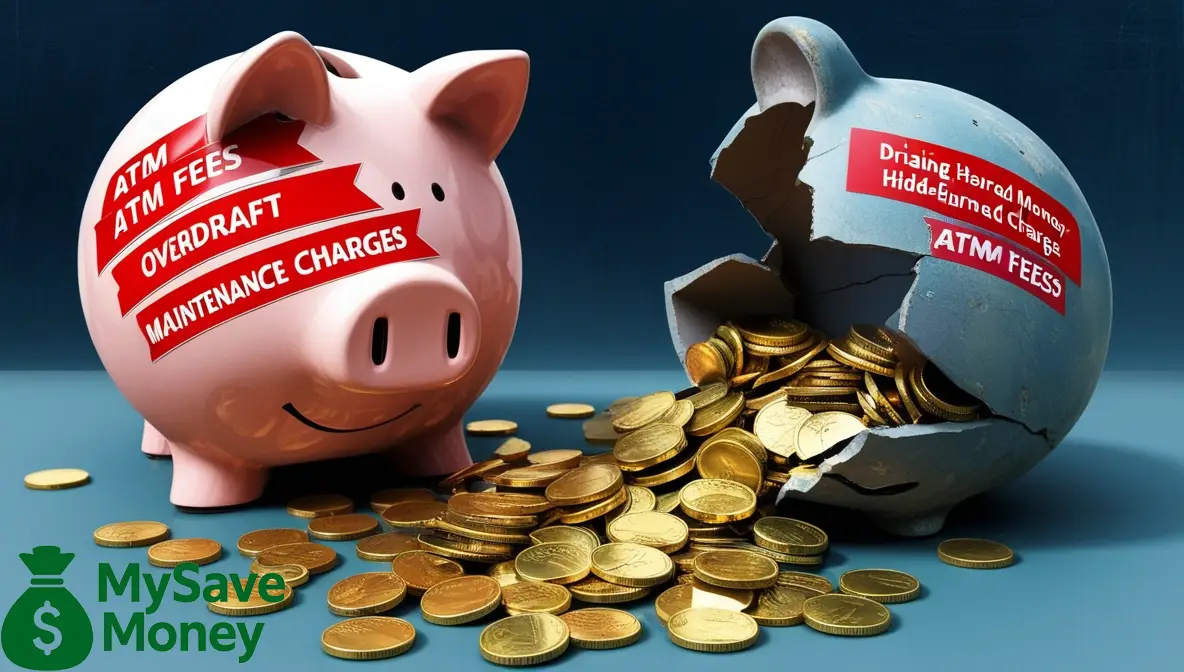
The Hidden Costs of Banking in America
Ever felt like your bank quietly takes more money than you expected? You’re not alone. Many Americans lose hundreds of dollars each year to hidden bank fees that sneak into checking or savings accounts.
From small monthly maintenance fees to surprise overdraft charges, these costs can quickly drain your wallet—especially if you’re just starting to manage your finances. The good news? You can avoid most bank fees once you understand where they come from and how to stop them.
In this guide, we’ll uncover the 5 most common hidden bank fees in the U.S., explain why they exist, and share simple, beginner-friendly strategies to keep your hard-earned money safe.
1. Overdraft Fees – The Silent Wallet Killer
What Are Overdraft Fees?
An overdraft fee happens when you spend more money than what’s in your checking account. Instead of declining the payment, the bank covers it—and then charges you a hefty fee (often $30–$35 per transaction).
Example:
If your balance is $10 and you swipe your debit card for $40, the bank may cover the $30 shortfall—but charge you an overdraft fee. Do this twice in one day, and you’ve lost $70+ instantly.
How to Avoid It:
- Opt out of overdraft protection. This way, your card will decline instead of charging you.
- Set up low-balance alerts via your banking app.
- Use banks with no overdraft fees, like Chime or Ally Bank.
- Track your expenses daily using a free budgeting app like Mint or Rocket Money.
👉 Pro Tip: Always keep a $100 “buffer” in your checking account to cover unexpected withdrawals.
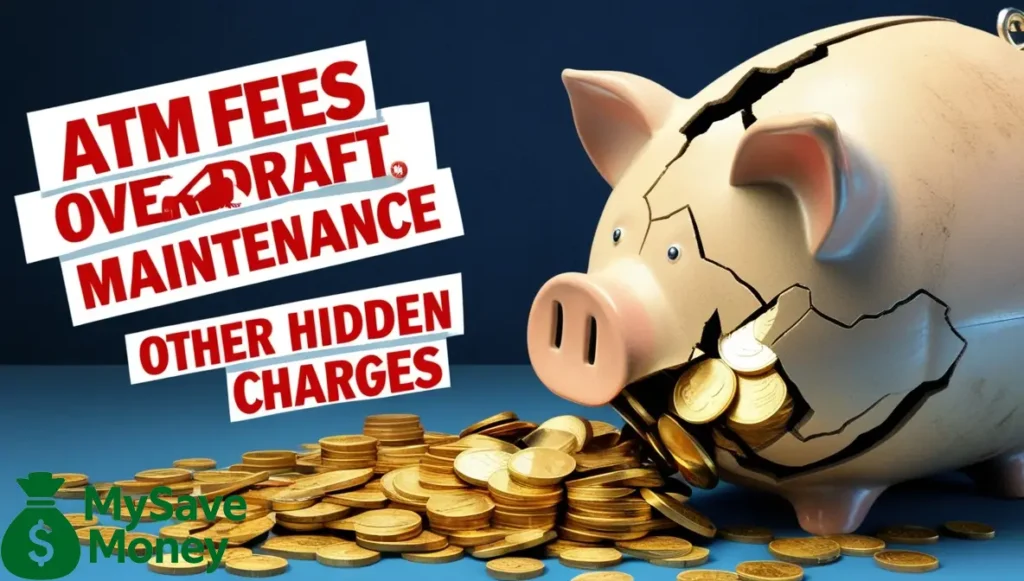
2. ATM Fees – Paying to Access Your Own Money
Why They Happen:
Using an ATM outside your bank’s network can cost $2.50–$5.00 per withdrawal. Both your bank and the ATM owner might charge you!
Example:
Withdraw $40 at an out-of-network ATM and you could pay up to $6 in fees—a 15% loss instantly.
How to Avoid It:
- Use your bank’s ATM locator to find nearby free machines.
- Switch to a bank that reimburses ATM fees, like Charles Schwab Bank or Capital One 360.
- Withdraw larger amounts less frequently to minimize fees.
- Go digital—use mobile payments like Apple Pay, Google Pay, or Venmo for smaller purchases.
3. Monthly Maintenance Fees – Paying to Keep an Account Open
What They Are:
Many traditional banks charge $10–$15 monthly just for having an account—unless you meet certain conditions (like maintaining a $1,500 balance or setting up direct deposit).
How to Avoid It:
- Choose a no-fee bank. Online banks like Discover Bank, SoFi Money, and Ally have no monthly fees.
- Set up direct deposits if required to waive the charge.
- Maintain the minimum balance—but if that’s hard, switch to a bank with no balance requirement.
Example:
A $12 monthly fee equals $144 per year—money that could go toward your emergency fund or a savings goal.
4. Paper Statement Fees – The Sneaky $2 Charge
Why It Happens:
Many banks charge $2–$5 per month if you receive paper statements instead of going paperless.
How to Avoid It:
- Switch to e-statements through your online banking portal.
- Download statements as PDFs and store them digitally (in Google Drive or Dropbox).
- Check statements monthly to catch errors or unauthorized charges early.
Real-Life Tip:
Paperless banking isn’t just cheaper—it’s also eco-friendly and safer from mail theft.
5. Foreign Transaction Fees – Costly for Travelers
What They Are:
When you use your debit or credit card abroad, many banks charge a 3% foreign transaction fee on every purchase.
Example:
Spend $1,000 on a trip to Mexico, and your bank may charge an extra $30—just for currency conversion.
How to Avoid It:
- Use travel-friendly credit cards like the Chase Sapphire Preferred® or Capital One Venture Rewards, which have no foreign transaction fees.
- Withdraw cash from a no-fee international ATM if available.
- Notify your bank before traveling to avoid fraud alerts that can freeze your card.
👉 Resource: Consumer Financial Protection Bureau (CFPB) offers free advice on understanding and avoiding hidden banking charges.
Bonus Tip: Always Read the Fine Print
Most banks disclose their fee structure—but it’s buried deep in terms and conditions. Take 10 minutes to review your bank’s “Fee Schedule” or Ask customer service for a breakdown.
Knowing these details helps you spot and eliminate unnecessary fees before they hit your account.
Practical Example: How Jake Saved $300 by Switching Banks
Jake, a college student in Ohio, was losing $25 a month to maintenance and ATM fees. After reading his bank’s fee schedule, he switched to Ally Bank, which offers free checking, no overdraft fees, and unlimited ATM reimbursements.
In one year, he saved over $300—money he redirected into his emergency fund.
You can do the same by reviewing your bank’s hidden charges today.
Downloadable Resource: Hidden Bank Fee Tracker (Google Sheets)
Stay on top of your bank charges with our free Hidden Bank Fee Tracker.
Track all fees, identify patterns, and calculate how much you’re losing annually.
👉 Download Hidden Bank Fee Tracker (.xlsx)
FAQs
What are the most common hidden bank fees in the U.S.?
The top ones include overdraft fees, ATM fees, monthly maintenance fees, paper statement fees, and foreign transaction fees.
How can I find out what fees my bank charges?
Check your bank’s website or account disclosures. You can also call customer service and ask for a “fee schedule.”
Are online banks better for avoiding fees?
Yes, online banks often have no monthly fees, no overdraft fees, and free ATM access, making them ideal for beginners.
Can I get bank fees refunded?
Sometimes, yes. If it’s your first offense, politely call your bank and ask for a refund—they often agree as a courtesy.
Why do banks charge so many hidden fees?
Banks rely on fees as a major revenue source. According to the CFPB, U.S. consumers paid billions annually in overdraft and maintenance fees.
Conclusion: Take Back Control of Your Money
Hidden bank fees may seem small, but over time they quietly eat away at your savings. By choosing no-fee banks, going paperless, and keeping an eye on your account balance, you can save hundreds of dollars each year.
Don’t let banks profit from your silence—review your statements, track fees, and make the switch to smarter banking today.
💡 Subscribe to MySaveMoney.com for more U.S. money-saving tips, budgeting guides, and financial checklists!
[…] your child turns 10 or older, open a U.S. bank savings account. It’s an excellent way to introduce real-world […]
[…] Many U.S. domestic airlines charge $30–$35 for checked luggage. If you can fit everything in a carry-on, you save that fee. […]
[…] to overspend: Because you don’t “feel” the money leaving your wallet immediately, you may […]
[…] Avoid these beginner pitfalls: […]